Source bath shower set for Home, Hotel, and Spa Use
Compare 30 bath shower set options from Chinese manufacturers. Buyers can evaluate brass and stainless steel materials, chrome finishes, and ceramic disc cartridges for household or commercial projects.
Key considerations
Products List




Comprehensive Sourcing Guide
Strategic Sourcing Guide for Bath Shower Sets
Navigating the global market for bath shower sets requires a disciplined approach that balances aesthetic requirements with rigorous technical verification. The core keyword "bath shower set" encompasses a wide spectrum of products, from single-handle contemporary faucets to complete bathroom accessory suites and thermostatic rainfall systems. Buyers must distinguish between these variations to ensure the selected procurement strategy aligns with the specific functional needs of their target market. This guide outlines the essential technical, compliance, and operational factors that define a successful sourcing campaign for these fixtures.
Technical Specifications and Material Composition
The foundation of any reliable bath shower set lies in its material composition and engineering specifications. A primary observation in the current market is the prevalence of brass bodies, often paired with zinc handles, which offers a balance of durability and cost-efficiency. However, buyers must also account for stainless steel variants, particularly for accessory sets including towel bars, robe hooks, and paper holders. The material grade is a critical differentiator; specifications often cite "AAA" grade materials, which implies a high standard of purity and structural integrity, though this claim requires independent verification.
The internal mechanics of the faucet are equally vital. The cartridge is the heart of the valve system, and the market offers options ranging from local brands to international manufacturers such as Sedal, Kcg, and Ms. The ceramic disc mechanism is the industry standard for longevity and leak prevention. When evaluating technical data, buyers should verify the working temperature and pressure limits. Typical operational ranges observed in the sector span from 0 to 90 degrees Celsius and a working pressure of 0.05 to 1.2 MPa. Exceeding these limits can lead to premature failure or safety hazards.
Surface treatment and finishing choices significantly impact both aesthetics and corrosion resistance. Chrome remains the dominant finish, often applied with specific layer thicknesses to ensure durability. Standard specifications may indicate a nickel layer of 2-3 microns with a chrome layer of 0.1-0.2 microns, or a more robust configuration of 6-8 microns of nickel and 0.25 microns of chrome. Alternative finishes such as gold or antique red are available through customization, but the underlying surface treatment, such as polishing or nickel plating, must be consistent to prevent peeling or discoloration over time.
Compliance, Certification, and Regulatory Standards
For international procurement, adherence to regional standards is non-negotiable. Bath shower sets intended for export must meet specific regulatory requirements that vary by destination. The supply chain data indicates that products often carry certifications such as CE, ACS, and WATERMARK. CE marking confirms conformity with health, safety, and environmental protection standards for products sold within the European Economic Area. ACS certification is specifically relevant for products entering the French market, ensuring water safety and material compatibility. WATERMARK is a critical standard for the Australian and New Zealand markets, verifying that the product is safe for use with drinking water.
Buyers must verify that the supplier's documentation explicitly lists these standards for the specific model being purchased. It is not sufficient to assume that a supplier's general capability includes these certifications; each batch must be compliant. Additionally, the product origin plays a role in regulatory acceptance. Products originating from China, specifically from manufacturing hubs in Zhejiang and Foshan, are common in the global market. However, the "Place of Origin" must be clearly documented to satisfy customs and regulatory bodies.
When evaluating compliance, buyers should also consider the "prod_standard" specifications related to dimensions. For instance, certain bathroom sets may be designed to fit specific installation standards, such as 400mm or 600mm spacing. These dimensional standards ensure that the fixtures align with pre-existing plumbing infrastructure in residential and commercial buildings. Failure to match these dimensions can result in costly installation delays and product returns.
Cost Drivers and Pricing Dynamics
The pricing of bath shower sets is influenced by a complex matrix of factors, including material costs, finishing complexity, and order volume. The observed price range in the market spans from approximately 1.43 USD to 866 USD, reflecting the vast difference between basic accessory sets and high-end thermostatic shower systems. Several key drivers influence where a specific product falls within this range.
First, the material grade is a primary cost determinant. Sets utilizing AAA grade stainless steel or high-purity brass command a premium over standard alloys. Second, the complexity of the finishing process adds cost. A simple polished chrome finish is generally more economical than multi-layer plating with specific micron thicknesses or custom colors like antique red. Third, the inclusion of additional features, such as thermostatic controls or rainfall shower heads with arms, significantly increases the unit price.
Order volume is another critical cost driver. The Minimum Order Quantity (MOQ) can vary widely, from as low as 1 unit for sample orders to 1000 units for bulk production. Suppliers often offer tiered pricing structures where the unit cost decreases as the order volume increases. Buyers should also factor in the "prod_packing" requirements. Customized packaging, such as foam, box, and carton combinations, adds to the overall cost but is essential for protecting the product during transit. Additionally, services like laser marking logos or barcode application represent value-added costs that must be included in the total landed cost calculation.
Typical Applications and Functional Versatility
Bath shower sets serve diverse applications across both residential and commercial sectors. The versatility of these products allows them to be integrated into a wide range of environments, from private households to high-end hotels and public facilities. The "Usage" attribute typically categorizes products as suitable for household or commercial use, though some high-end models are specifically designed for commercial durability.
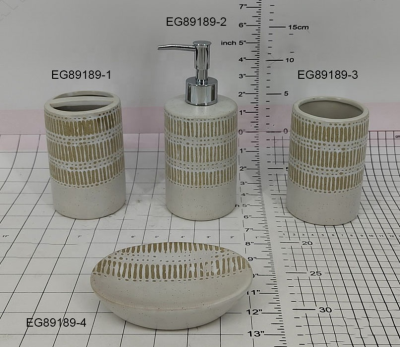
In residential settings, the focus is often on aesthetic integration and user comfort. Contemporary and modern styles dominate this segment, with features like single-handle controls and rainfall shower heads providing a spa-like experience. The "Sets Include" attribute often highlights comprehensive bathroom accessory suites, including soap dishes, towel bars, and paper holders, which are essential for a cohesive bathroom design.
Commercial applications demand higher durability and ease of maintenance. Products designed for commercial use often feature robust valve materials, such as ceramic, and finishes that resist frequent cleaning chemicals. The "Advantage" attributes of eco-environmental friendliness and durability are particularly relevant in this sector, where sustainability and long-term cost of ownership are key decision factors. Furthermore, the installation method, such as in-wall mounting, is a critical consideration for commercial renovations where space optimization and sleek aesthetics are priorities.
Supplier Evaluation and Operational Capabilities
Selecting the right supplier requires a thorough evaluation of their operational capabilities and production capacity. The supply chain data indicates that leading manufacturers in regions like Zhejiang and Foshan possess significant production capacity, with some facilities capable of producing up to 100,000 sets per month. This capacity is a strong indicator of the supplier's ability to handle large orders and maintain consistent supply chains.
Buyers should assess the supplier's lead time and delivery reliability. Typical lead times for production range from 15 to 30 days after receiving the deposit, depending on the complexity of the order and the customization level. The "Departure Port" is another logistical factor, with Ningbo and Shanghai being common export hubs for these products. Efficient logistics planning is essential to ensure that goods arrive on schedule, particularly for projects with tight deadlines.
Customization capabilities are a key differentiator among suppliers. The availability of ODM (Original Design Manufacturing) and OEM (Original Equipment Manufacturing) services allows buyers to tailor products to their specific brand requirements. Services such as laser marking logos and customized packing are standard offerings that enhance brand identity. Buyers should verify the supplier's ability to meet specific customization requests, such as unique finishes or specialized dimensions, before committing to a large order.
Quality Control and Long-Term Procurement Considerations
Ensuring consistent quality is paramount in the procurement of bath shower sets. Quality control measures should be established at every stage of the production process, from raw material inspection to final packaging. The "Advantage" attributes of durability and eco-environmental friendliness must be validated through rigorous testing. Buyers should request test results or quality assurance certificates that confirm the product meets the specified working temperature and pressure ranges.
Long-term procurement considerations involve building a sustainable relationship with the supplier. This includes establishing clear communication channels for addressing any post-sales issues and ensuring a steady supply of replacement parts or accessories. The "Sets Include" components, such as soap dispensers and towel bars, should be sourced from the same supplier to maintain consistency in material and finish.
Buyers must also consider the lifecycle of the product. High-end features like thermostatic faucets and ceramic disc cartridges are designed for longevity, but their performance depends on proper installation and maintenance. Providing clear installation guidelines and maintenance recommendations to end-users can extend the product's lifespan and reduce warranty claims. Finally, staying informed about changes in international standards and regulations ensures that the procurement strategy remains compliant and competitive in the global market.
Comparative Analysis of Product Attributes
To facilitate informed decision-making, buyers should compare key attributes across different product options. The following table summarizes the critical specifications observed in the market for bath shower sets.
| Attribute Category | Specification Option A | Specification Option B | Specification Option C |
|---|---|---|---|
| Body Material | Brass | Stainless Steel | Brass |
| Handle Material | Zinc | Stainless Steel | Zinc |
| Finish | Chrome | Polished | Chrome / Gold / Antique |
| Cartridge Type | Ceramic Disc (Sedal/Kcg) | Ceramic Disc | Ceramic Disc |
| Working Temp | 0-90°C | 0-90°C | 0-90°C |
| Working Pressure | 0.05-1.2 MPa | 0.05-1.2 MPa | 0.05-1.2 MPa |
| Certifications | CE, ACS, WATERMARK | CE, ACS | CE, ACS, WATERMARK |
| Installation | In-Wall / Surface | Surface | In-Wall |
| MOQ | 1 - 1000 | 1 - 1000 | 1 - 1000 |
| Lead Time | 15-20 Days | 25-30 Days | 15-20 Days |
| Origin | Zhejiang, China | Foshan, China | Zhejiang, China |
This comparison highlights the variability in material choices, finishing options, and logistical parameters. Buyers must weigh these factors against their specific project requirements, budget constraints, and timeline expectations. By systematically evaluating these attributes, procurement professionals can select bath shower sets that deliver optimal performance, compliance, and value.
FAQs
What materials are used for bath shower set bodies?
Brass is the primary material used for the body of these shower sets, often paired with zinc handles. Stainless steel is also available for accessory components like towel bars and soap dishes. Buyers should verify the specific material grade, such as AAA, to ensure structural integrity and durability.
Which certifications do these products typically hold?
Products often carry CE, ACS, and WATERMARK certifications to meet international safety and water quality standards. CE confirms compliance for the European Economic Area, while ACS is required for the French market. WATERMARK is essential for Australian and New Zealand markets to ensure drinking water safety.
How long is the lead time for production?
The typical lead time ranges from 15 to 30 days after receiving the deposit, depending on order complexity. Some standard models may have a lead time of 15-20 days, while customized orders often require 25-30 days. Buyers should confirm specific timelines based on their customization needs.
Can I customize the finish and packaging?
Yes, customization is available for finishes such as chrome, gold, and antique red, as well as for packaging. Suppliers offer ODM and OEM services including laser marking logos and barcode application. Customized packing options like foam, box, and carton combinations are also standard to protect the product during transit.
What is the minimum order quantity for these sets?
The minimum order quantity can vary from 1 unit for sample orders up to 1000 units for bulk production. Specific models may have an MOQ of 1, while larger orders often benefit from tiered pricing structures. Buyers should check the specific MOQ for the desired model and customization level.
Where are these products manufactured and shipped from?
These products originate from manufacturing hubs in Zhejiang and Foshan, China. The departure ports are typically Ningbo or Shanghai, facilitating efficient export logistics. Buyers should verify the place of origin on documentation to ensure compliance with customs and regulatory requirements.